

What’s “data”, and why is it so important to our business processes? Data is the record of Human behavior (customers, employees, suppliers, stakeholders) and provides the foundation for leadership decisions, balancing our intuition. But data only becomes useful to AI systems when it is actively curated for accuracy, consistency, completeness and relevance. It means changing the way we see data, how we curate and protect it, and prepare it for system integration.
What is “data” anyway, and why is everyone talking about it? Buying it and selling it, and seeming to protect it with their lives? Data is the raw information your business creates and collects every day; a running log of your customer interactions, sales numbers, hires and fires and market trends. This information lives in spreadsheets, cloud systems, internal apps, lists, schedules, libraries, emails that, all put together, make up your company database.
In its natural habitat, your data can be found in the cloud, on your server in the basement or in captivity with your IT guys. When it’s clean, organized, and tagged right, this information is the valuable insight – “business intelligence” – you can learn from and act on. It’s a record of behavior, not words or surveys (which people never answer truthfully) of how people respond to your products, service or leadership.
Did your customers love your latest app? Did your employees hate the latest re-org, and are leaving in droves? Are your new hires using the new onboarding tool? Are we spending too much on software licenses? Data is the answer to every question a leader might have and is far more reliable than our intuition or our considerable experience. When used correctly, data fuels decisions, predicts trends, and powers tools that give you a competitive edge.[i]
This sounds simple. But being data-driven is an act of courage. We all want to hear the stories we tell ourselves rather than face the truth found in our stacks.
The first rule of good data is quality. If it’s messy, old, incomplete, disorganized, we make decisions blindly, miss opportunities and slow progress. It is also not usable to AI systems.
High quality data needs to be actively cared for: cleaned, completed, named, labeled, weeded and protected. Like your frozen leftovers storied in tubs in the outdoor freezer, without clear labels that explain what it is, where it came from, and when it was created, you might never find it again or find it too late to be edible. Quality data is accurate, meaning it reflects reality, not assumptions. Good data is complete, with critical fields filled in, not showing a bunch of half empty rows; remember, that AI will fill in the gaps itself if it is forced to guess. The fields are also consistent, so the same thing is named and measured the same way across systems. And it is timely, meaning it is fresh enough to support real decisions, not from fifteen years ago.
The purest, cleanest data in the world is useless if it’s not accessible. Company data is owned by the business, not one departments. Everyone in the organization needs access to it, from sales to ops to HR to finance, and every brain should be using it, whether based in silicon or carbon.
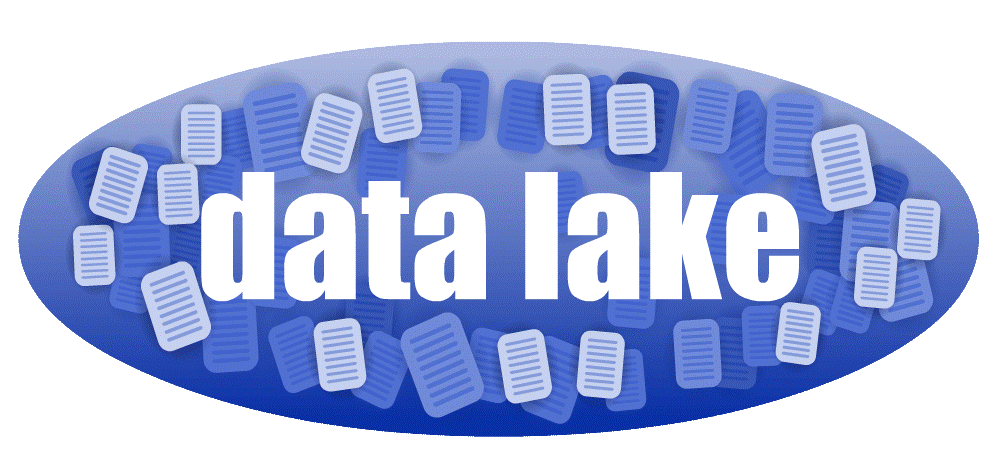
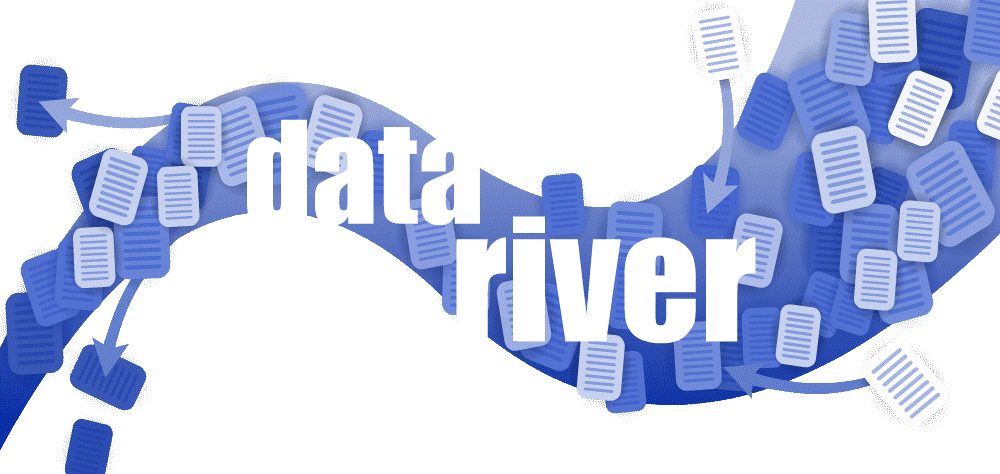
Back in the Stone Age, before AI, we would refer to our information repositories as a “data lake”. Our data sat in warehouses, was updated in batches, and served as a calm pool of files you could scoop from. But today’s organizational data is more like a river, constantly flowing, new material streaming in, existing records updating in real time, old records flushing out. Definitions and metrics shifting, labels and search parameters getting revised.
The value is found in its constant refinement and accurate reflection of context, not the raw hoarding. A data river forces us to design systems to keep it crystal clear and moving freely. Like a mountain stream, a good data river needs guards, cleaners and rules against dumping and littering. First, intake protection; whether this is run by Humans or automated systems, it will need access control, privacy rules and security checkpoints; too many people with the ability to write to the source increases the risk of spoilage.[ii]
Next, cleaning and tagging occurs before it enters the flow; protocols with shared definitions and metadata, so teams don’t waste time finding and prepping data after it’s floating downriver, and harder to find. As many as 60% of AI projects fail because of poor quality data.[iii] We need a team of Park Rangers with big nets fishing out old leaves and dead fish; data older than 10 years can be stored in archives, and duplicated content deleted. Add rules for version control (only one version of each file is needed, sorry hoarders!)
Finally, ownership and accountability; this is set up by naming Humans as data stewards for key domains with AI and Human agents that run quality checks, flag anomalies, validate lineage, and log who changed what and why. Your data river is your organizational common good; but its care and keeping is the responsibility of a few.
Like the water cycle, starting its life as rain on a mountaintop and ending in a recycling septic tank, data has a lifecycle that can be tracked and traced. Data starts its life as behavioral information – collected, cleaned, organized, stored, governed and secured – and eventually ends it either archived or deleted. Each step has a protocol, and each one matters; skipping one has consequences downstream.
Need help with AI Integration?
Reach out to me for advice – I have a few nice tricks up my sleeve to help guide you on your way, as well as a few “insiders’ links” I can share to get you that free trial version you need to get started.

No eyeballs to read or watch? Just listen.
Working Humans is a bi-monthly podcast focusing on the AI and Human connection at work. Available on Apple and Spotify.

About Fiona Passantino
Fiona helps empower working Humans with AI integration, leadership and communication. Maximizing connection, engagement and creativity for more joy and inspiration into the workplace. A passionate keynote speaker, trainer, facilitator and coach, she is a prolific content producer, host of the podcast “Working Humans” and award-winning author of the “Comic Books for Executives” series. Her latest book is “The AI-Powered Professional”.
[i] Compton (2023) “Why Data Access is Key” Forbes Magazine https://www.forbes.com/sites/insights-cloudera/2023/01/17/why-data-access-is-key/
[ii] “Are data more like oil or sunlight?” Harvard Business Review https://www.economist.com/special-report/2020/02/20/are-data-more-like-oil-or-sunlight
[iii] Edjlali (2025) “Lack of AI-Ready Data Puts AI Projects at Risk” Gartner https://www.gartner.com/en/newsroom/press-releases/2025-02-26-lack-of-ai-ready-data-puts-ai-projects-at-risk