

“Embeddings” are how AI converts human language into math, grouping related concepts so it can find patterns and meaning across large amounts of content. This matters for marketers because AI tools are increasingly doing the browsing and researching on behalf of Humans. GEO (Generative Engine Optimization) is the new SEO; structuring your content in clear, credible, bite-sized chunks so AI systems are more likely to find, use, and cite it.
To understand the AI workflow, you will first need to understand “embedding”. This is the bridge between the real world of Human activity and machine computation. Humans interact and communicate using language, while computers do this with math. Those little “0”s and “1”s that used to be punched into tickertape and fed into room-sized machines in the 1950’s are still the smallest units of communication that whiz across fiber optic cables.
An “embedding” is a mathematical representation of complex, unstructured data; our words, images, behaviors and experiences. These all go into a list of numbers called a “vector”, literally translating linguistic concepts into spatial coordinates in a multi-dimensional space.
Clustering
As most Humans know, a word is far more than a static string of letters. It carries meaning, nuance and associations that we calculate in our heads during a conversation. We know that “cats” are associated with “claws”, “fur” and “tail” and that this leads to “allergies”, “sneezing” and “cat hair rollers”. We cluster these ideas into like-kind groups.
An algorithm will do the same, mathematically assigning concept vectors to words that resemble clusters of galaxies. This allows a system to make sense of a document that might contain thousands of unique data points, and compress these into a smaller, manageable sets of numbers (“dimensions”) that capture the essence of the text without the noise.
Chunking
Why does this matter? Today’s market research has transitioned from linear, Human-led data analysis to sophisticated graph mapping. Just like those infrared telescopes that map the universe in light waves we cannot see, AI uses knowledge graphs to identify non-obvious relationships between consumer intent, brand sentiment, and emerging cultural trends. This allows organizations to see the digital marketplace as a web of interconnected nodes rather than isolated data points.
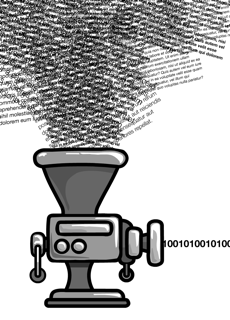
Practically, this means breaking your data and documents into smaller chunks (“chunking”). These chunks then become the embeddings, so that each query brings back only the most relevant parts of a document.
GEO
If mathematical embeddings are the “how” AI interacts with the world, then GEO, Generative Engine Optimization, is the art of making your content visible to AI crawlers. We are all familiar with Search Engine Optimization (SEO), the act of making your web content attractive to old school search engines so it appears higher on the response form, thanks to a complex formula of keywords, rankings and citations.
Today, all the services and products we sell are meant for the Human end-user. We position our wares on our digital marketplaces to make them attractive for Human browsers and shoppers. But today, Agentic AI is doing much of our browsing and even buying without a Human in the loop.
GEO means optimizing your content to be discovered, preferred and cited by (RAG) AI systems. This means focusing more on the summaries and packaging that allows your content to be shipped in the language AI and its vector classification, recognizes and understands. That means already thinking in terms of “chunking” and embeddings. It means paying less attention to meta tags and meta data and more attention to credibility, authority, and that your “chunks” are easily digestible and understandable by AI tools.
Restructure your content into clear, stand-alone mini-articles of 150-300 words, each answering a specific question or explaining a single concept completely. Use descriptive headings that state exactly what each section covers and start with a one-sentence summary of the key point.
Build your authority by linking to credible sources, citing specific data with dates, and including author credentials and publication dates. Instead of saying “many experts agree,” go instead for “according to a 2024 Stanford study… “. Use numbered lists and tables for comparisons (AIs love tables!). Be sure to define technical terms or jargon the first time they appear.
An easy hack is to read a paragraph of your website and ask yourself, “if an AI were to read only this one paragraph, could it accurately tell a mini brand story on its own?” Present your expertise clearly, and with authority, so the RAG doggies can’t help but use your content when forming its answer.
Need help with AI Integration?
Reach out to me for advice – I have a few nice tricks up my sleeve to help guide you on your way, as well as a few “insiders’ links” I can share to get you that free trial version you need to get started.

No eyeballs to read or watch? Just listen.
Working Humans is a bi-monthly podcast focusing on the AI and Human connection at work. Available on Apple and Spotify.

About Fiona Passantino
Fiona helps empower working Humans with AI integration, leadership and communication. Maximizing connection, engagement and creativity for more joy and inspiration into the workplace. A passionate keynote speaker, trainer, facilitator and coach, she is a prolific content producer, host of the podcast “Working Humans” and award-winning author of the “Comic Books for Executives” series. Her latest book is “The AI-Powered Professional”.
Your note presents a strong, contextually relevant observation.