
Most people reach for AI when they’re writing or editing, which means they’re only using it for a fraction of the work. But AI is just as valuable at the beginning of a process as the end — helping teams generate ideas, challenge assumptions, and pressure-test thinking before a single word is written. This article shows how leaders can bring AI into the full workflow, including a set of prompts to try in your next meeting.
Most employees who are using AI tend to reach for it at the same two moments during a typical job: somewhere in the middle when they want to write something (an email, report, social post, summary) and towards the end when they want to clean it up, translate it, shorten or version it. It feels efficient; and, of course, it is when compared with the analogue way of doing things.
But encourage your teams to zoom out and map the entire workflow for any task, from that first fuzzy idea to the moment something goes live, and the afterglow tasks that inevitably follow. The writing and editing phases are just two steps out of eight (or more!), which means they supported by AI for just 25% of the journey and muscling through the other 75% by hand.
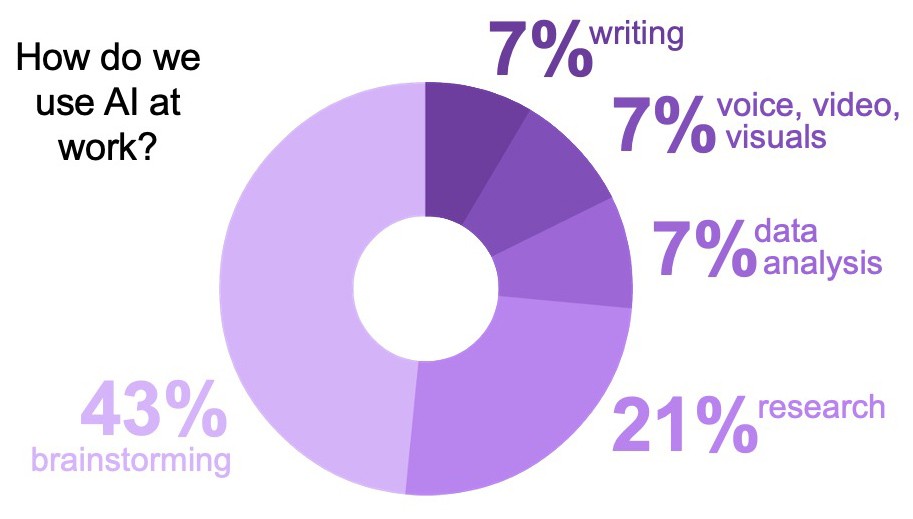
Ideally, an AI assistant should be at step “0” and follow straight through to step “9”, from the initial brainstorming-before-the-brainstorming, before a single word is written. AI is there to help generate ideas and angles no one considered, challenge basic assumptions or surface ideas your team hasn’t voiced yet. The AI-supported shortlisting can help pressure-test priorities and spot what’s missing. AI assists with research, to see if the idea already exists out there, or versions of it, to see how it is done elsewhere. For the first concept draft, AI is a testing partner, helping fine-tune a pitch, roleplay their toughest stakeholder, anticipate objections or stress-test the logic before a real Human is ever exposed to it.
Then comes the grinding work of developing the idea: documentation, versioning, validation, content development… all the areas we typically already use AI. Markeing help, to tailor messages for different audiences, formats or channels. And then after launch, once it’s “out there”, AI can help evaluate outcomes, extract lessons and feed insights back into the next cycle.
Encourage teams to use the ideation part of the AI brain earlier and later in the process, in fact, throughout. Do this by leading by example; bring your AI brain with you to meetings so you can show your team how it works. Here are a few ways to try first:
“Blue Sky”: “Here’s the original idea. Now, forget all constraints. If we had unlimited budget, time, and talent, what would the boldest version of this idea look like?”
“Devil-in-the-Details”: “Give me the strongest possible case against this plan. Don’t be polite! Be our harshest critic, the boardmember with a bad attitude, who is the last one to convert.”
“Stress Test”: “Here’s the last version of the idea. What might cause this to fail? List the most likely breaking points.”
“Pre-mortem”: “Fast-forward 18 months into the future. This idea was launched and failed. What went wrong? Describe all the many ways by working out scenarios for each in order of most to least probable.”
“Customer-Eye-View”: “Here are our top five customer persona’s [describe personas]. Now, imagine you’re one of those at a time, hearing about this service for the first time. What would delight them? What would frustrate them? And what keywords or descriptors would they be most receptive to?”
“Elephant in the Room”: “What is the one obvious question nobody in this meeting wants to ask, or comment no one wants to say out loud right now?”
“The 10x”: “Imagine the pilot went well. Now, how would we need to think differently about this service if the goal was 10 times more ambitious than what we’ve agreed on?”
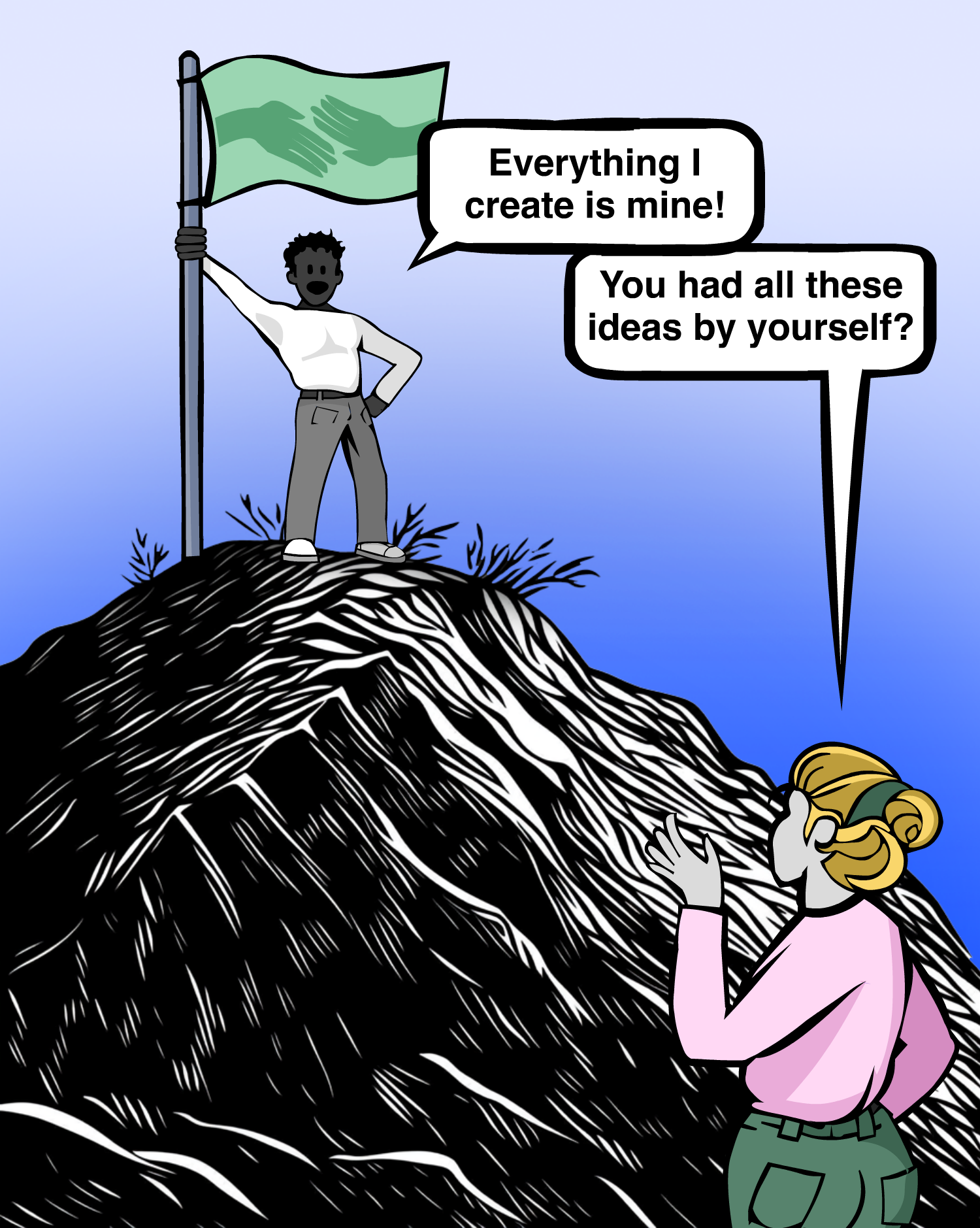
When leaders treat AI as a partner across the entire workflow rather than a last-minute writing assistant, and shows this in practice, the team sees and experiences what this looks like. The results are in real-time and the quality of the ideation session undeniable; decisions get sharper, blind spots are caught sooner and no one has to play the wet blanket to quash the creative flow of their colleagues.
Even stronger, turn on voice mode, either dictation (the microphone icon just under the prompt window) or conversation mode (the little lines next to the microphone) and allow the AI team member to throw down with a syntheic voice. The Humans get to focus their energy on judgment, flow and creativity while the AI works out scenarios, one after the other, for any situation imaginable. The result is AI-Power in the room where it happens.
Need help with AI Integration?
Reach out to me for advice – I have a few nice tricks up my sleeve to help guide you on your way, as well as a few “insiders’ links” I can share to get you that free trial version you need to get started.

No eyeballs to read or watch? Just listen.
Working Humans is a bi-monthly podcast focusing on the AI and Human connection at work. Available on Apple and Spotify.

About Fiona Passantino
Fiona helps empower working Humans with AI integration, leadership and communication. Maximizing connection, engagement and creativity for more joy and inspiration into the workplace. A passionate keynote speaker, trainer, facilitator and coach, she is a prolific content producer, host of the podcast “Working Humans” and award-winning author of the “Comic Books for Executives” series. Her latest book is “The AI-Powered Professional”.
The content is really great
thanks!