
For people with autism or cognitive impairments, the world is a complicated and overwhelming place. AI is remarkably good at hearing the signals beneath our communication and can act as a translator and assistant for people on the go, thanks to voice activation. Five simple ways to use AI for anyone navigating fast-moving world.
My son Tilo is twenty-three. When you look at him, you see a handsome, lanky guy in a Stussy t-shirt and baggy jeans, looking like 99% of young men anywhere. But Tilo lives with autism and a debilitating cognitive impairment.
Our world races at a lightning pace, twisting, turning, evolving, becoming wildly complex and difficult, leaving so many of us exhausted and never feeling like we’re enough, like we missed the memo, like we’re looking at life through a pane of dirty glass. There’s something we’re not quite… getting.
When Tilo walks through life he is met with the same assumptions and expectations as the rest of us. The same anxiety, fear of missing a step or misunderstanding. Times 100. The same feeling that everyone seems to understand what’s going on but you, but triple.
He has had to learn the rules and nuances of Human engagement the hard way; one at a time, on purpose, by heart. An official-looking letter arrives from the tax office, and he cannot tell if it is urgent or junk. A friend he has been texting suddenly goes quiet and he doesn’t know why. The simple task of buying new batteries for his watch involves a dozen small decisions that most people make without thinking. So much effort goes into these ordinary things we do every day that he often winds up on the sofa, in recovery, doing nothing at all.
Communication dog whistles
AI is swiftly being adopted in our workplaces and personal lives. We are engaging with it as a therapist, a communication coach and deep work guru. We use it as a researcher, emailer and summarizer. We tend to engage with AI as a fantastic word-salad-maker, but forget that its greatest gift is its extraordinary ability to deeply listen and recognize patterns.
We often forget that AI has been exposed to a mountain of very Human data; not just corporate brochures and annual reports but revelations about the most intimate Human experience, from the Book of Change, the Iliad and Upanishads to the poetry of Anaïs Nin and the speeches of Malcolm X. Like a dog, AI can hear sounds inaudible to most Humans. It can speak sales figures with as much ease as the language of our rich emotional lives, and can effortlessly separate signal from noise.
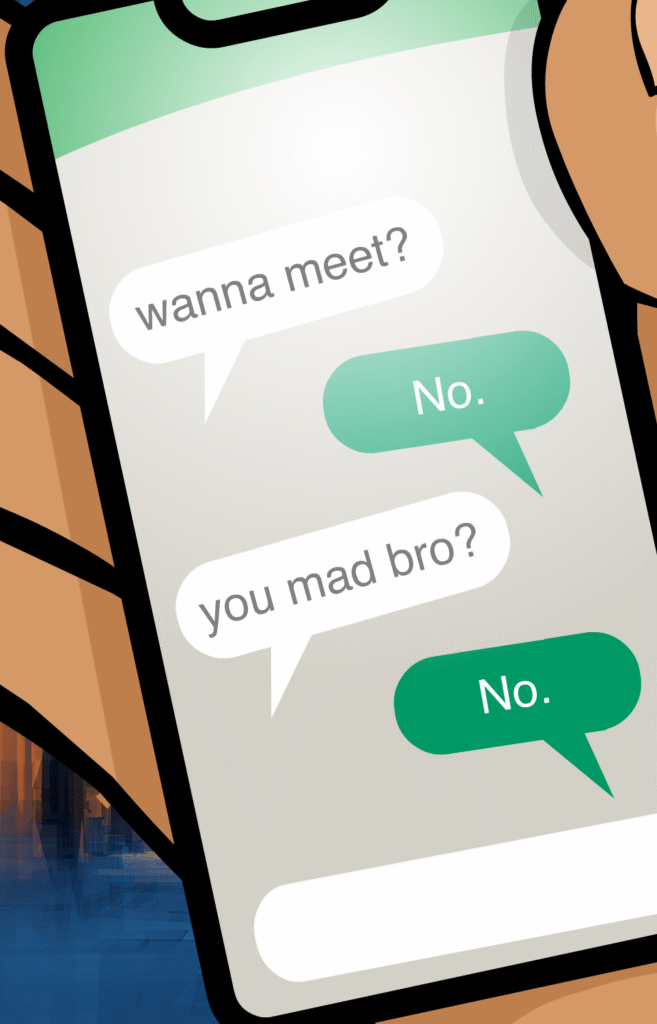
Neurotypicals communicate much of their text as subtext, using the dog whistle of subtle body language, inference, nuance and a lexicon of slang and emojis to convey information. Tone, subtext and the gap between what is said and what is meant account for gaping divides between generations and cultures, and this seems to grow by the day. The act of adding a period at the end of a text signals passive aggression. A misplaced emoji can signal flirtation.
Practical voice-activated AI
The same intelligence that we use at our desktops during the working day is available on a smartphone in speech mode. It’s a pocket assistant for anyone who struggles with a complex world on a daily basis. Using voice mode AI just means learning the interface.
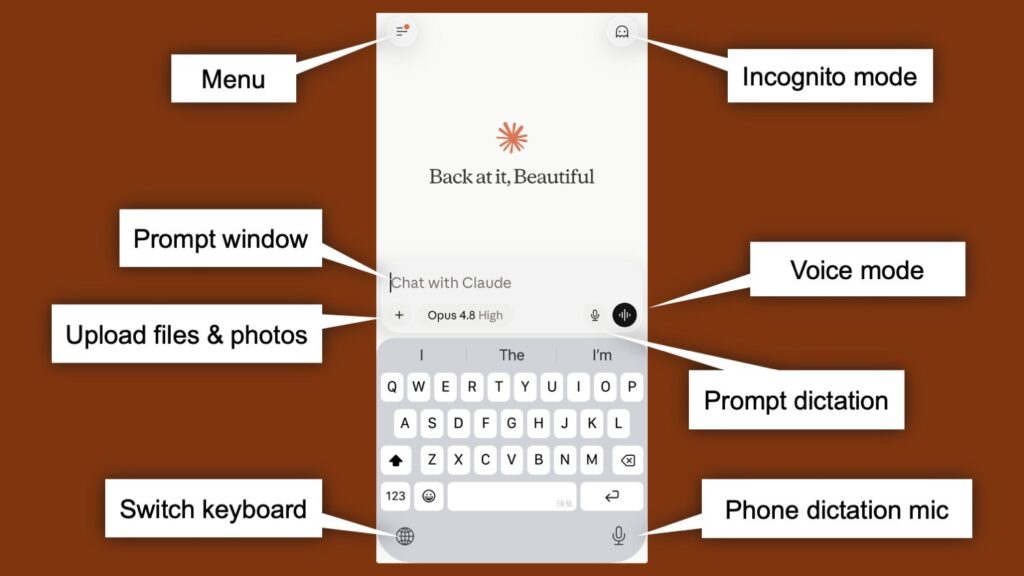
Dictation is the small microphone icon to the left of the black button. Tap it once and speak your prompt in; it turns your speech into written text that fills in your message box. You still send it like a normal message and read Claude’s reply on the screen. This is a good method when you have a clear prompt but no free fingers, and you still want to see the written prompt before shooting it off.
The mic icon at the very bottom is your phone’s own dictation tool and not connected to your AI app. It does the same basic job; turns speech into text in the box. You will find it nearly everywhere else text is created, from WhatsApp to Messages to email.
Voice mode is the black button on the far right with the sound-wave lines. Also known as “conversation mode”, you talk, your AI listens and talks back. This is hands-free and eyes-free. This has become so good recently that having these conversations has become downright creepy.
The best way to practice is simply dive in; some people adopt voice activation right away, while others find it odd, creepy and inconvenient. This is easier done at home with no one around. Having a good set of earbuds on the move helps.
Making sense of it all
Using voice mode, here are five easy ways to engage AI in your daily life.
1. Decoding the scary mail
Official letters with single-spaced text across two pages trigger all of our anxiety and dread. The government or a medical specialist has decided we’re in some kind of trouble, there’s something urgent expected of us or we owe money for something we did wrong. These letters can go unread for days even in the best cases, but for someone who reads slowly and with great effort, whose vocabulary does not include bureaucratic terminology, the letters are often ignored completely.
Photograph the letter and upload it using the “+”. Then ask your AI: “Explain what this letter means in clear simple language. Let me know what I need to do, and by when.”
2. Decipher confusing messages
We all get these strange texts from friends or colleagues that seem to suggest one thing but clearly say another. We receive something from a co-worker that feels borderline passive aggressive, get a message from our boss that feels like a difficult conversation is coming. We all see communication through our own baggage and histories, and doubt what we read. After all, we see the world the way we are, not the way it really is; as if there’s such a thing as “objective truth” in Human communication.
Take a screenshot of the loaded message and upload it with the “+”. Then ask your AI: “This is a text from a friend. Is she mad at me? What do you think it means, and how should I respond if I don’t feel like I did anything wrong?” You can also give the model some background information for context; what were the events leading up to this message?
3. Coaching for a hard conversation
Difficult conversations are a necessary part of our daily lives, and no one likes having them. For people with neurodivergence, these events can be extremely stressful since they are more often conducted poorly and in a way that can be experienced as traumatic. Before a call with an irritated employer, a high-stakes interview, or an honest talk with a family member, talk it through out loud with your AI coach.
Explain the context of the conversation, who you are talking to, what your goals are and what a successful conclusion would look like. Ask the AI to play the role of the opposing party, so you can practice how to get it started (often the hardest part), what words to use to make your point and how to conclude it on a positive note. This will result in fewer surprises and better delivery in the moment.
4. Prep for overwhelm
No one likes going to the dentist, going to get an ID card at a crowded city hall building or having a first day at a new job. Preparing for the process using AI step by step, walking you through every part of the event in advance so there are fewer unknowns to ambush you makes for a much easier visit.
Ask your AI: “Today I need to renew my driver’s license by going to the city hall office in The Hague, the Netherlands. What do I do, and what are all the things I need to know before I go? I don’t like crowds and I don’t want to forget anything.” Your AI will likely show you how to make an appointment, provide a list of the documents to bring and advise you on the best times to avoid crowds. Then it will explain what to expect, the words to use at the desk, how long it might take and where the exits are.
5. Emotion regulation
Most Humans experience a whirlwind of different emotions during the course of a normal day. Sometimes it’s difficult to know which is which, and to get to the bottom of why we feel the way we do. Often, when we experience a thick blanket of anger, it’s just a cover for stress, overwhelm, frustration, shame, regret or heartbreak. Once these more nuanced emotions are named and examined, they can more easily be addressed. Ask your AI: “I feel awful today, really mad; I feel like screaming at the entire world. Can you help me figure out why I’m like this today, and what I can do to get back to normal?” Give context, what happened this morning, what led up to the emotion. The AI might ask where the emotion is felt in the body, which often gives clues to what’s going on behind it.
Courage
The world isn’t made for people like Tilo. He navigates a confusing place with grace and courage, and with patience few of us can even understand. He and others like him inspire us all to see what’s possible, rather than what’s just out of reach.
As we take our AI neurodiversity workshops on the road, teaching people who struggle to use AI to make a bit of sense of it all, as we role play and demo for groups around the country, it’s a profound reminder that the AI adoption race is leaving a large portion of us behind. AI helps us all fill the gaps in our unique Human brains, making things just a little bit easier in an ever-more complicated world.
Need help with AI Integration?
Reach out to me for advice – I have a few nice tricks up my sleeve to help guide you on your way, as well as a few “insiders’ links” I can share to get you that free trial version you need to get started.

No eyeballs to read or watch? Just listen.
Working Humans is a bi-monthly podcast focusing on the AI and Human connection at work. Available on Apple and Spotify.

About Fiona Passantino
Fiona helps empower working Humans with AI integration, leadership and communication. Maximizing connection, engagement and creativity for more joy and inspiration into the workplace. A passionate keynote speaker, trainer, facilitator and coach, she is a prolific content producer, host of the podcast “Working Humans” and award-winning author of the “Comic Books for Executives” series. Her latest book is “The AI-Powered Professional”.