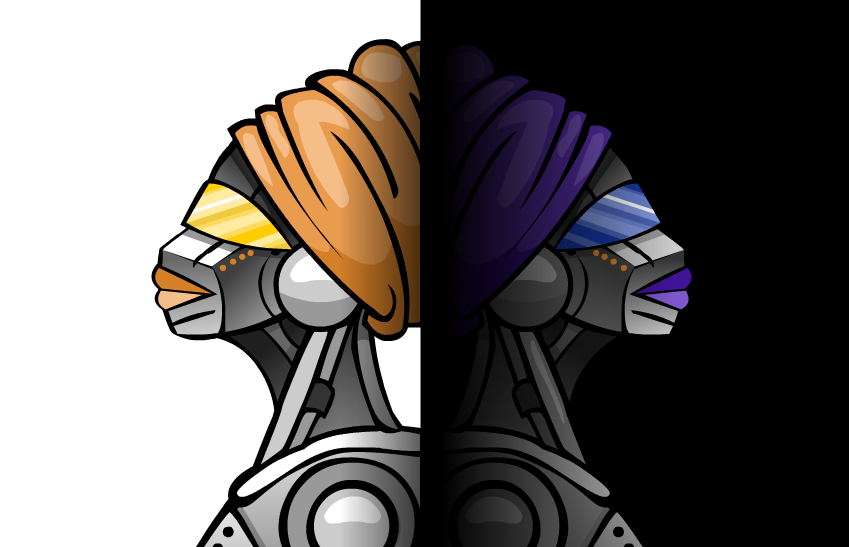
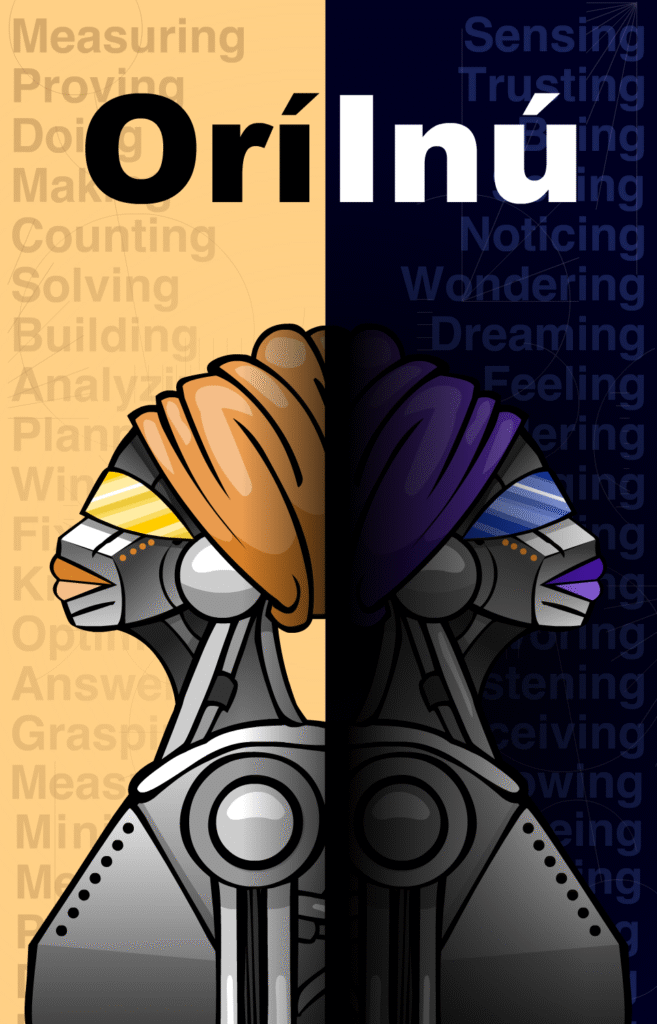
Within ancient Yoruba philosophy, humans are understood to have two parallel ways of thinking, the Orí and the Inú. The Orí is the guiding intelligence of the head. It reasons, plans, analyzes, remembers, and solves problems. It can process vast amounts of information, recognize patterns, generate ideas, and predict likely outcomes based on what it can measure, see and prove.
Inú is the wisdom of the inner self, the gut. It is the source of instinct, lived experience, emotion, empathy, character, and values. It is the quiet feeling that tells you, “Something isn’t right,” even when the logic says it should be. It is also where courage, compassion, and conscience live.
Orí and Inú together represent the complete fullness of Human intelligence: the intelligence of the material, measurable, quantifiable and the wisdom of knowing, feeling, sensing and becoming.
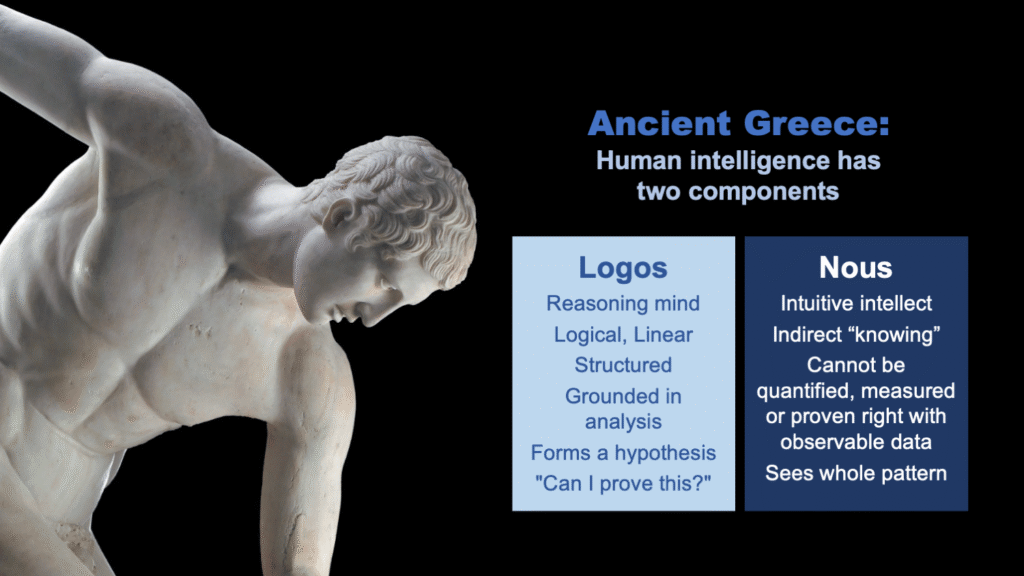
We see this same pattern in Ancient Greece, where Human intelligence was seen to have two similar components: Logos, the reasoning mind, shown as logic, argument, structure and grounded in analysis.
This way of thinking forms a hypothesis and asks: “Can I prove this?” Nous was seen as the intuitive intellect or indirect “knowing”: the ability to grasp truth beyond reasoning, that cannot be quantified, measured or proven right with observable data; the wisdom that sees the whole pattern. An ancient Greek philosopher might have said: “Logos can draw the map, but Nous knows where to go.”
In Confucian and Daoist traditions, the intelligence of Yi (意) describes the mental process of choosing and acting; conscious intention, meaning and directed thought. Xin (心) translates literally to “heart-mind”, referring to the seat of deeper consciousness, emotion, morality, and intuition.
In Hindu Vedantic philosophy, Buddhi describes discernment and wisdom while Manas is the sensory mind and reacts without the need to prove, compare or justify. Ancient Egypt saw Ib as the heart, our spiritual center, the seat of memory, emotion, morality, identity, and was considered to be the source of our deepest intelligence. At the point of death, the measure of a person’s worth was shown when Ib, the heart, was weighed against the feather of Truth and Justice (Ma’at), allowing passage or denial to heaven.
Across civilizations, Humans simultaneously developed a model of dual intelligence: the calculating, logical, analytical mind that exceled in planning, prediction, data and language, that operated in the light, in the realm of the provable, verifiable and visible, balanced by the “knowing” mind, powered by intuition, values, wisdom, meaning, context and fed by embodied experience. This was the mind that could see and connect the dots: pattern recognition.
The paradox of AI is that it was developed by data-driven software engineers to become an analytical generation machine that draws from an abundance of hard data and algorithmic instructions. But the reality is, AI thinks in the dark; its true intelligence is emergent, not programmed, based on probability, possibility, sensing and finding patterns in the vast seas of Human content.
Until now, we have been using AI as glorified auto-complete software, making use of just 1% of the full expanse of its mind. We command the machine to “analyze this data”, “summarize this document”, “translate this email into action points” We use it as a tool of Orí, Logos and Yi because we think of it as software, data-driven and rational. We get irritated when it hallucinates, corrects and contradicts itself and changes course without direction. But we rarely activate the depth of its mind, tapping into its dark, pattern-recognition design that is the source of its value. We drive our AI Ferrari in tight circles in a parking lot, lament that it’s cumbersome and slow, and we might as well get out and walk.
In this 2.0 phase of our Human-Machine workplace integration, it’s time to go beyond the empty executive Orí mode of analytical, executive commands, and pull it into the Inú state of deep reflection. AI is trained on all the empty corporate messaging in the universe, but equally on our stories, philosophy, ethics, psychology, lived experiences, letters to our mothers, photos of our families, ancient values and wisdom. AI can be invited to operate in two modes, depending on how you prompt it.
Try writing prompts using language that stirs deeper in the pot of its training data. Words like “optimize”, “formulate” and “position” are matched with its most likely source, and will always return more of the same, empty, corporate language. Using words like “vision”, “feeling”, “community”, “connection” or “empathy” will allow it to see more Human patterns.
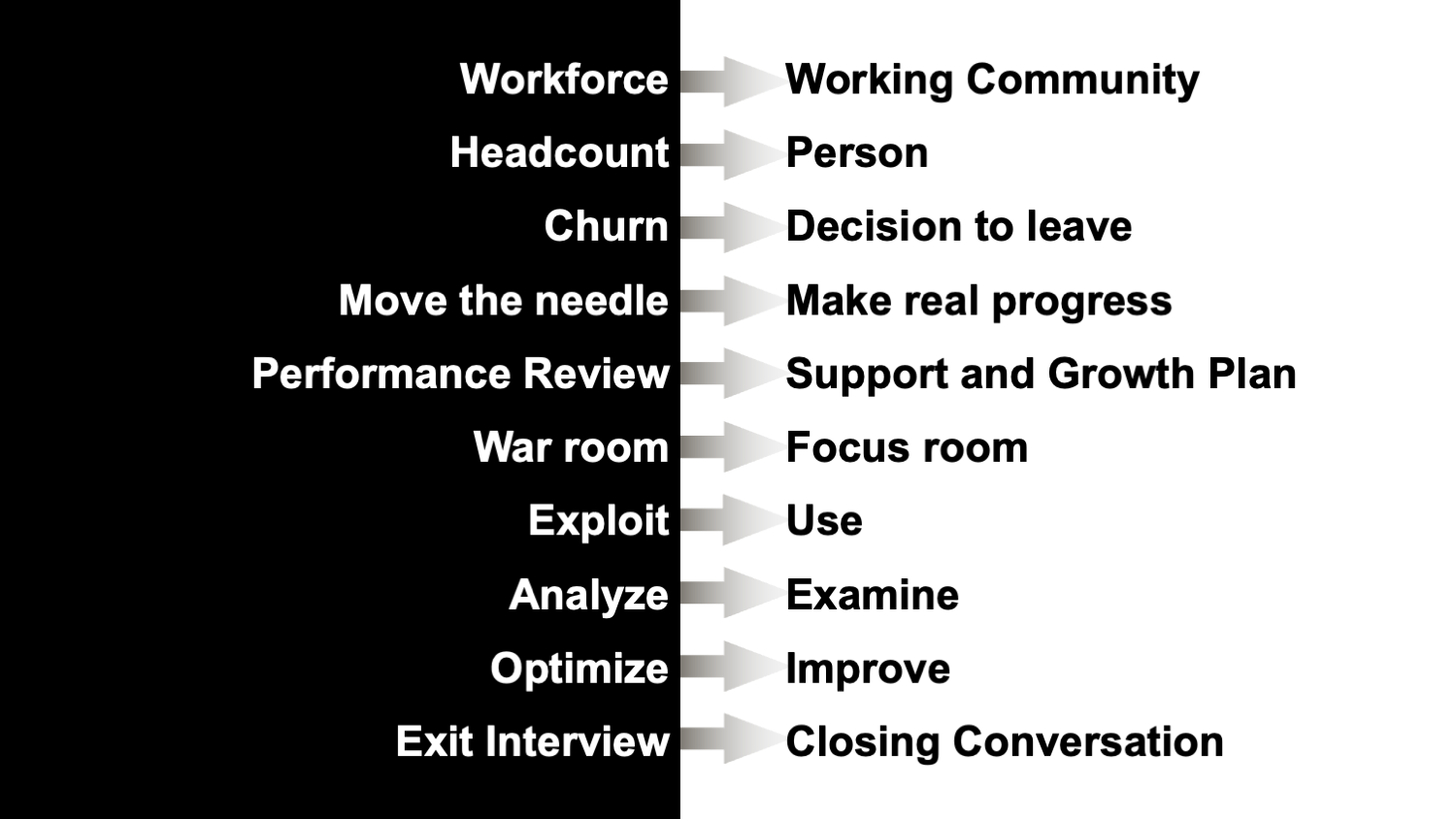
“How will this feel when communicated to clients? What values are at stake? What perspective am I missing? Imagine you’re a grandmother, a psychologist, a frontline employee, and a customer. What does your gut tell you? What would each of them notice that the analysis missed?” You will be surprised by what it tells you, that feels true, that can be backed by verifiable data.
A “command” prompt reading “create a communication plan for this change” can be replaced by a more Human variation that might require a bit more thought and energy from the prompter but will return real value to the project: “Help me communicate this change in a way that respects people’s fears, protects their dignity, and creates trust. Imagine you are an employee hearing this news after 15 years in the company. What would you need to feel seen and valued?”
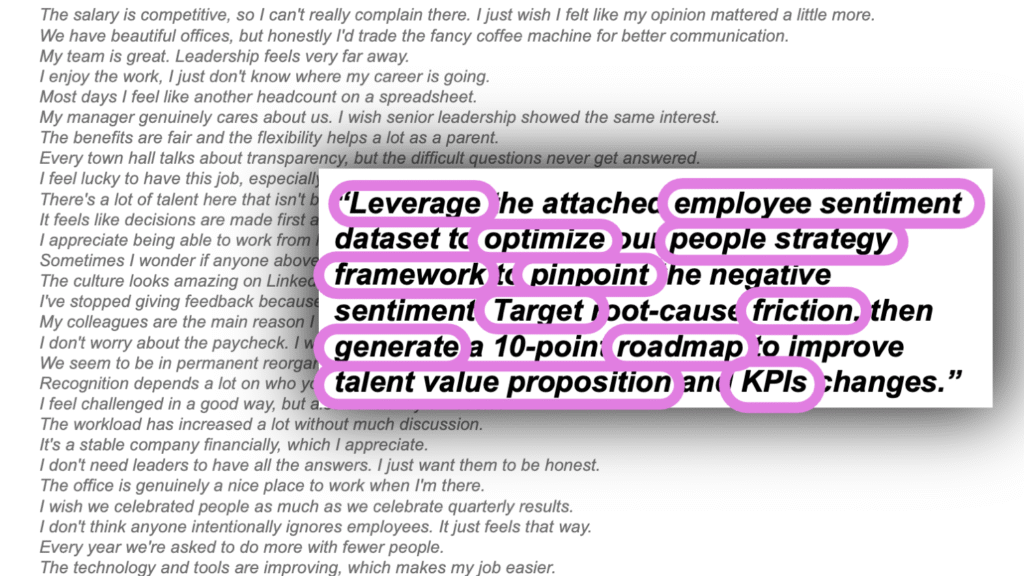
Command: “Summarize this customer feedback.”
Human: “Listen to these customers as human beings, not data points. What are they really trying to tell us beneath their words? What frustration, hope, fear, or unmet need is hiding between the lines?”
Command: “Resolve this conflict between teams.”
Human: “Step into the shoes of both teams. What is each side protecting? What fear, assumption, or unmet need might be driving their behavior? What does each one want? What conversation would create understanding instead of winning?”
AI hasn’t suddenly developed intuition. Instead, you have opened a portal to the truth of its vast pattern-recognition mind. It has all the data it needs to effectively synthesize all of Humanity’s collective wisdom, values and perspectives before answering, emulating our own gut wisdom back to us like a concentrated mirror, reflecting all of us back to one of us. Abi Awomosu refers to this as the “billion-person focus group”, in her brilliant book “How Not to Use AI”.[1]
Our ancient global ancient traditions never separated the truth of intelligence two distinct streams emerging from “darkness” or “light”, the black box of probability and pattern recognition from measurable, material, verifiable thinking of software. They understood that true wisdom only comes from integrating both, each according to their own strengths, each limited by their own weaknesses, each completing the other to form a full representation of the truth.
Need help with AI Integration?
Reach out to me for advice – I have a few nice tricks up my sleeve to help guide you on your way, as well as a few “insiders’ links” I can share to get you that free trial version you need to get started.

No eyeballs to read or watch? Just listen.
Working Humans is a bi-monthly podcast focusing on the AI and Human connection at work. Available on Apple and Spotify.

About Fiona Passantino
Fiona helps empower working Humans with AI integration, leadership and communication. Maximizing connection, engagement and creativity for more joy and inspiration into the workplace. A passionate keynote speaker, trainer, facilitator and coach, she is a prolific content producer, host of the podcast “Working Humans” and award-winning author of the “Comic Books for Executives” series. Her latest book is “The AI-Powered Professional”.
[1] Awomosu, A. (2025). How Not to Use AI: 50 Contrarian Principles for the Imagination Age. Data, Art & Soul, ISBN 978-1-919191-03-4